

Why Your First Collision Estimate Can Change After Repairs Begin
What Arizona Drivers Should Know About Hidden Damage, Insurance Supplements, and the Complete Repair Plan
You brought your vehicle to the body shop. Someone inspected the damage, took photographs, and prepared an estimate.
Now repairs have started, and the estimate has changed.
It is completely understandable to wonder why.
Was something missed? Is the shop adding unnecessary work? Why can’t anyone tell you the exact cost from the beginning?
The simplest answer is that a collision estimate can only include damage that can be seen or confirmed at that point in the process. Until the damaged parts are removed, no estimator can see everything happening underneath them.
That first estimate is not meaningless, but it may not be the complete story.
The First Estimate Is Based on What We Can See
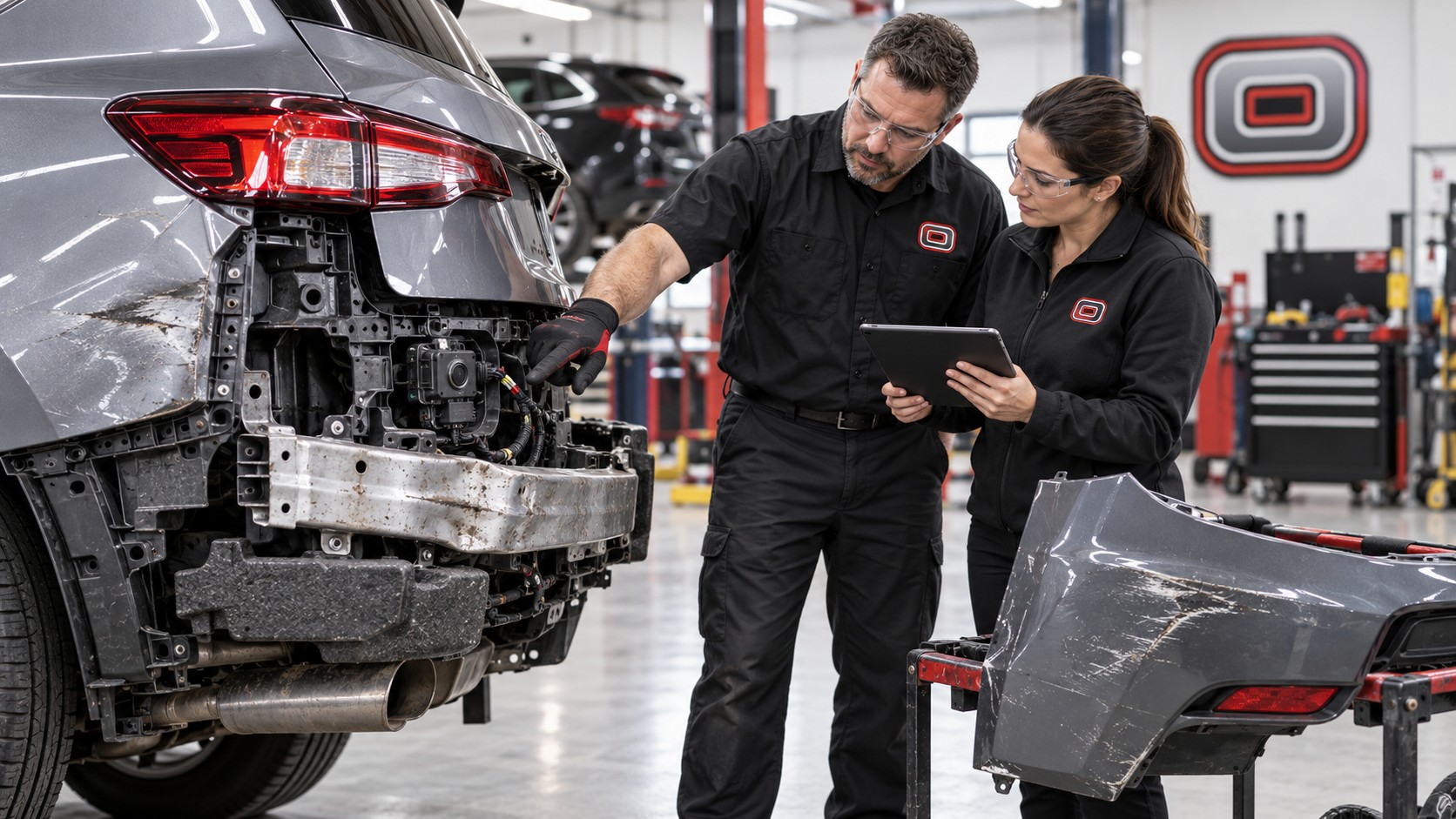
Imagine a vehicle with a damaged rear bumper. From the outside, the repair may appear fairly straightforward. The bumper cover is cracked, the paint is scraped, and one corner is pushed inward.
An estimator can document all of that.
What the estimator cannot see is what happened behind the bumper cover.
The impact may have broken mounting brackets, crushed the energy absorber, bent the reinforcement bar, pinched wiring, or moved a sensor out of position. The rear body panel may also be damaged even though it is still concealed.
Those parts do not become visible until the bumper is removed.
This limitation becomes even more important with an online estimate. Photographs can provide a useful starting point, but they only show the exterior of the vehicle. Orlando Auto Body’s online estimate page explains that the most accurate estimate requires a proper in-person inspection.
Even then, some damage remains hidden until disassembly begins.
Taking the Vehicle Apart Gives Us Better Information
Once the repair is authorized, technicians begin carefully removing the damaged panels, trim, lights, bumper components, and other parts necessary to reach the affected area.
This stage is often called disassembly or teardown. The name can sound dramatic, but the purpose is very practical. It gives the repair team access to areas that could not be inspected from the outside.
This is often the moment when a repair that looked simple becomes more complicated.
A cracked bumper may turn out to involve a damaged reinforcement bar. A dented fender may have pushed into a mounting area behind it. A headlight that still turns on may have broken attachment points that prevent it from sitting securely. A parking sensor may look normal but no longer point in precisely the right direction.
The visible damage gets your attention. The hidden damage determines what the vehicle actually needs.
That is why a professional collision repair inspection is more than someone walking around the vehicle and writing down what looks broken. It is an investigation into how far the force of the collision traveled.
The Estimate Begins Turning Into a Repair Plan
Once the damaged area is opened up, the technicians have much better information.
They can see which components are repairable, which ones need to be replaced, and whether the collision affected the vehicle’s structure, wiring, electronics, or safety systems.
At this stage, the estimate starts becoming a complete repair plan.
That distinction matters.
An estimate describes the damage and expected work based on what is currently known. A repair plan brings together everything the technicians learn from the inspection, disassembly, measurements, diagnostic scans, and manufacturer repair information.
The repair plan answers a more important question than “How much will this cost?”
It answers, “What does this particular vehicle need to be repaired correctly?”
Modern Vehicles Have Changed the Estimating Process
Years ago, a body shop could learn a great deal about a damaged vehicle through visual inspection and hands-on experience.
Experience still matters tremendously, but modern vehicles have added another layer of complexity.
A bumper is no longer just a piece of painted plastic. It may contain parking sensors, radar equipment, cameras, wiring, impact absorbers, and carefully positioned brackets. A windshield may support a forward-facing camera. A side mirror may house blind spot technology. A quarter panel may be connected to advanced structural materials using manufacturer-specific joining methods.
Even a relatively minor collision can affect systems that the driver cannot see.
That is why technicians must research the repair procedures for the exact year, make, and model. A repair that is acceptable on one vehicle may not be permitted on another.
The manufacturer may require a component to be replaced rather than repaired. It may call for diagnostic scans, structural measurements, new one-time-use hardware, or an ADAS calibration after a particular part is removed.
Those requirements may not be obvious during the initial walk-around.
Orlando Auto Body’s manufacturer certifications help support this vehicle-specific approach. As we explain in our article about certified Ford and Lincoln collision repair, modern repairs depend on the correct training, equipment, materials, and manufacturer procedures.
So, What Exactly Is a Supplement?
If additional damage or required work is discovered after the original estimate, the repair team prepares an updated estimate documenting those findings.
When insurance is involved, that update is commonly called a supplement.
The word “supplement” sometimes makes customers nervous because it sounds like someone simply decided to increase the bill.
That is not what it is supposed to mean.
A supplement should explain what was discovered, why the repair plan changed, and what additional parts, labor, or procedures are required. The shop may provide photographs, measurements, diagnostic results, manufacturer procedures, parts information, or other documentation to support the request.
The insurance company then reviews that information and determines what it will authorize under the claim and policy.
A supplement does not automatically mean the original estimate was careless. Often, it means the technicians now have access to information that was physically unavailable before disassembly.
Why Didn’t the Shop Just Estimate High From the Beginning?
Because guessing is not accuracy.
A shop should not add parts or procedures simply because they might be needed. That could create an inflated estimate containing repairs the vehicle does not actually require.
The responsible approach is to document what is known, inspect further when authorized, and update the repair plan when new evidence is found.
Think of it like a home repair after a water leak. A contractor can see the damaged drywall and flooring, but no one knows exactly what happened inside the wall until it is opened. The initial assessment may be accurate based on visible conditions and still change once the concealed area is accessible.
Collision repair works much the same way.
The first estimate reflects the visible damage. Disassembly reveals the deeper damage. The updated repair plan reflects what the vehicle actually needs.
Why Can This Change the Completion Date Too?
When the repair plan changes, the timeline may change with it.
A newly discovered damaged component may require another part to be ordered. The insurance company may need time to review the supplement. A manufacturer-required calibration may need to be scheduled. Structural damage may change the order in which technicians perform the work.
Sometimes the technician is ready to continue, but the repair must pause while authorization or parts are pending.
This is why a completion date provided early in the process is often an informed projection rather than a guarantee. Our article about how long collision repair actually takes explains how the repair itself, insurance review, parts availability, and final quality checks all contribute to the timeline.
No one enjoys hearing that a repair will take longer than initially expected. Clear communication about what changed and why can make that news much easier to understand.
What Should You Ask When an Estimate Changes?
You do not need to become a collision-repair expert to ask good questions.
If the estimate or completion date changes, ask what was discovered after disassembly. Find out whether the shop is waiting for insurance authorization, parts, or a required outside service. Ask whether a manufacturer procedure changed the repair plan and whether any portion of the repair may not be covered by insurance.
A good explanation should connect the change to something specific.
“There was more damage” is not nearly as helpful as, “After we removed the bumper cover, we found that the reinforcement bar behind it was bent, so we documented it and submitted a supplement to your insurer.”
The more specific the communication, the easier it is to understand where the repair stands.
A Changing Estimate Is Frustrating, but Hidden Damage Should Not Stay Hidden
No vehicle owner wants the repair to become more expensive or take longer.
But there is something worse than discovering hidden damage during the repair.
It is failing to discover it at all.
A vehicle can look beautiful on the outside while still having damaged components underneath. Paint and bodywork are important, but a complete collision repair may also involve structure, electronics, sensors, brackets, wiring, and manufacturer-required procedures.
Finding those issues before the vehicle is reassembled gives the repair team an opportunity to address them properly.
The estimate changed because the information changed.
The First Estimate Is the Beginning of the Conversation
Your first collision estimate provides a starting point. It records what can initially be seen and gives everyone an early understanding of the expected repair.
The complete repair plan develops as technicians inspect the vehicle, remove damaged components, research the manufacturer’s requirements, and document everything the collision affected.
At Orlando Auto Body, our job is not to make assumptions about what might be damaged or ignore what cannot be seen from the outside. Our job is to gather the right information, explain what we find, and build a repair plan around the vehicle in front of us.
If you have been involved in an accident, contact the Orlando Auto Body location nearest you:
Mesa: 480-844-4858
Scottsdale: 480-590-3135
Gilbert: 480-656-9202
You can also request an estimate online.