

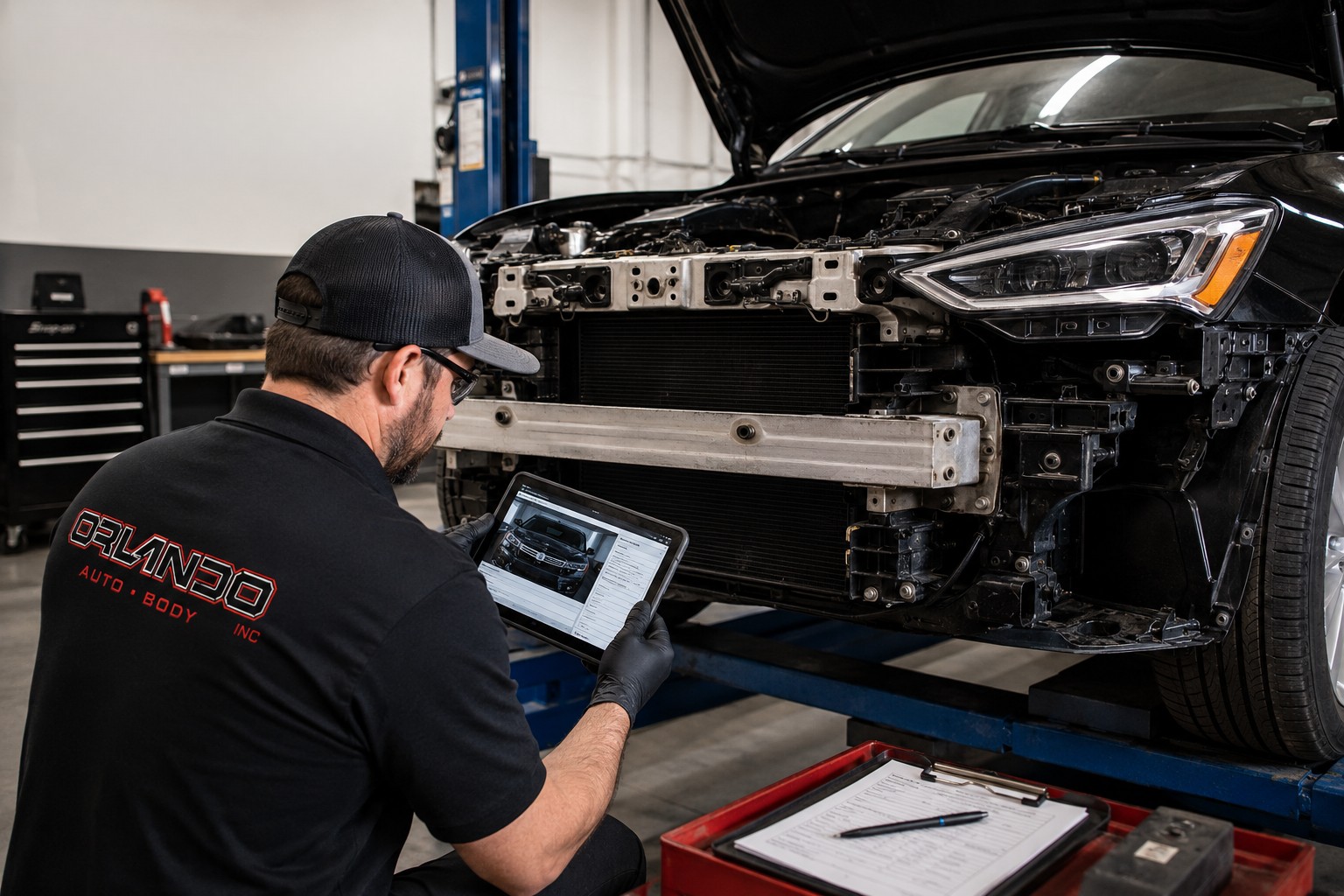
What Happens During a Collision Repair Inspection? Why Arizona Drivers Should Never Skip This Step
After an accident, most drivers focus on what they can see.
A dented fender.
A cracked bumper.
A broken headlight.
But what you can see is often only part of the story.
Modern vehicles are filled with advanced safety systems, sensors, cameras, and structural components that may be affected even when the exterior damage appears minor. In Arizona, extreme heat, busy East Valley roadways, and increasingly sophisticated vehicle technology make a professional collision repair inspection more important than ever.
At Orlando Auto Body, every repair begins with a detailed inspection because understanding the full extent of the damage is the first step toward restoring your vehicle safely and correctly.
Your Repair Starts Before Any Parts Are Ordered
Many drivers assume a collision repair inspection is simply a technician looking over the vehicle and preparing an estimate.
In reality, a proper inspection is much more than that.
It is an investigation designed to uncover both visible and hidden damage, evaluate the vehicle’s safety systems, and create a repair plan based on manufacturer guidelines.
What appears to be a simple bumper repair may involve damaged mounting brackets, compromised sensors, calibration requirements, or structural concerns that cannot be seen from the outside.
The goal is not simply to identify what is broken. The goal is to understand everything the collision affected.
Arizona Heat Can Make Hidden Damage Worse
Arizona presents unique challenges that many drivers never consider after an accident.
During the summer, vehicle interiors can exceed 140 degrees, while exterior surfaces are exposed to intense sunlight day after day. When plastic components, mounting tabs, clips, and trim pieces have been damaged in a collision, those extreme temperatures can accelerate deterioration.
A bumper that appears secure immediately after an accident may begin shifting weeks later. Cracked mounting points can weaken further. Panels that seem properly aligned may start separating as damaged components continue to fail.
This is one reason Orlando Auto Body encourages drivers throughout Mesa, Gilbert, and Scottsdale to have their vehicle inspected promptly after an accident rather than waiting for additional problems to appear.
Documenting Visible Damage
Every inspection begins with a careful evaluation of the damage that can be seen.
Technicians document damaged panels, paint concerns, broken components, impact locations, and any visible indicators that may suggest deeper issues. Detailed photographs and documentation help establish an accurate repair plan while also supporting communication with insurance companies throughout the process.
Even seemingly minor damage can provide important clues about what happened beneath the surface.
Looking Beyond the Bumper
One of the biggest misconceptions drivers have is that bumpers are primarily cosmetic.
Today’s bumper systems are often home to cameras, parking sensors, radar equipment, impact absorbers, and reinforcement structures that play a critical role in vehicle safety.
A low-speed parking lot collision may leave only a small crack in the bumper cover while damaging components hidden behind it. Without a thorough inspection, those issues can easily be overlooked.
This is why professional collision repair involves much more than evaluating what is visible from the outside.
East Valley Traffic Creates Unique Collision Patterns
The Orlando Auto Body team repairs vehicles from throughout Mesa, Gilbert, Scottsdale, and surrounding East Valley communities.
Many collisions in our area occur in shopping center parking lots, school pickup lines, busy intersections, freeway merge areas, and stop-and-go commuter traffic. While these accidents often happen at lower speeds, they frequently impact the areas where manufacturers place cameras, radar sensors, and other advanced safety technology.
What looks like a minor accident can still create repair and calibration needs that are critical to the vehicle’s long-term safety and performance.
Evaluating Advanced Safety Systems
Modern vehicles rely heavily on Advanced Driver Assistance Systems, commonly known as ADAS.
Features such as blind spot monitoring, adaptive cruise control, lane departure warning, rear cross-traffic alert, and automatic emergency braking all depend on sensors and cameras being positioned with incredible precision.
Even a relatively minor collision can affect their accuracy.
During the inspection process, technicians evaluate whether these systems may have been impacted and determine whether additional testing, repair procedures, or calibrations will be required as part of the repair plan.
This is especially important because many ADAS-related issues are not immediately obvious to the driver.
Checking for Hidden Structural Damage
Not all collision damage is visible.
A vehicle may appear to have only cosmetic damage while hidden concerns exist beneath the surface. Structural components, suspension parts, mounting points, alignment systems, and underbody components can all be affected during an accident.
Identifying these concerns early allows technicians to create a more accurate repair strategy and helps prevent surprises later in the repair process.
More importantly, it helps ensure the vehicle can be restored according to manufacturer standards whenever possible.
Creating a Repair Blueprint
Once the inspection is complete, the information gathered is used to create a detailed repair blueprint.
Rather than relying on assumptions, technicians develop a repair plan that identifies the necessary repairs, replacement parts, refinishing requirements, safety system considerations, and manufacturer-recommended procedures.
This blueprint becomes the roadmap for the entire repair process.
The better the inspection, the better the repair plan.
Why Orlando Auto Body’s Inspection Process Is Different
At Orlando Auto Body, inspections are designed to uncover the full impact of a collision—not simply generate an estimate.
Our technicians are trained to evaluate hidden damage, structural concerns, calibration requirements, manufacturer repair procedures, and vehicle-specific considerations that may affect the repair process.
As vehicles continue to become more advanced, this level of attention has become increasingly important.
A quality repair starts with understanding the vehicle, understanding the collision, and understanding what it takes to restore both safely and correctly.
Why Collision Repair Inspections Matter
A thorough inspection helps ensure damage is properly identified, safety systems are evaluated, repairs follow manufacturer recommendations, and hidden concerns are addressed before work begins.
Most importantly, it gives both the repair team and the vehicle owner a clearer understanding of what is required to restore the vehicle properly.
That level of knowledge creates better repairs, fewer surprises, and greater confidence in the finished result.
Final Thoughts
The most important part of a collision repair often happens before the first repair begins.
A professional inspection allows technicians to understand the full extent of the damage, identify hidden concerns, and create a repair strategy focused on safety, quality, and long-term vehicle performance.
At Orlando Auto Body, every repair begins with a detailed inspection because the best repairs start with the right information.
Whether you’ve experienced a major collision or a seemingly minor accident, a thorough inspection is the first step toward restoring your vehicle with confidence.