

Why Does My Car Need a Calibration After a Minor Accident?
A customer walks into our shop after a minor accident.
The bumper is damaged, but the vehicle still drives fine. The headlights work. There are no warning lights on the dashboard. Everything seems normal.
Then they see the repair estimate.
Along with the body repair, there is something called an ADAS calibration.
The first question is usually:
“Why does my car need that? The bumper is the only thing that’s damaged.”
It’s a fair question.
The answer is that modern vehicles are packed with cameras and sensors that help keep you safe. Even a minor accident can affect how those systems work.
What Is ADAS?
ADAS stands for Advanced Driver Assistance Systems.
You may not recognize the term, but you probably use these features every time you drive.
ADAS includes technologies such as:
- Automatic emergency braking
- Lane departure warning
- Blind spot monitoring
- Adaptive cruise control
- Rear cross-traffic alerts
- Forward collision warning
These systems are designed to help drivers avoid accidents and improve safety on the road.
Think of It Like Glasses
One of the easiest ways to understand ADAS calibration is to think about a pair of glasses.
Imagine your glasses get bumped and become slightly crooked.
You can still see.
But everything is just a little off.
That’s similar to what can happen when a camera or sensor gets knocked out of position during an accident.
The system may still function, but it may not function correctly.
Your Car Is Looking at the Road Too
Many modern vehicles have cameras mounted near the windshield and sensors hidden behind bumpers, grilles, mirrors, and emblems.
These components are constantly monitoring the road around you.
They help your vehicle identify lane markings, monitor traffic, detect obstacles, and calculate following distances.
After an accident, even a relatively minor one, those components can shift slightly.
A sensor that is only a small amount out of position can affect how the system interprets what it sees.
Why a Bumper Repair May Require Calibration
This is where many drivers get confused.
The damage may appear to be limited to a bumper cover or small section of the vehicle.
However, many manufacturers place radar sensors and safety equipment directly behind those bumpers.
If the bumper is removed, repaired, replaced, or repositioned during the repair process, the sensor’s alignment may need to be verified and recalibrated.
That’s why a vehicle can require ADAS calibration even when the visible damage seems minor.
Modern Collision Repair Is About More Than the Dent
Twenty years ago, collision repair was mostly about repairing damaged panels, replacing parts, and matching paint.
Today’s vehicles are different.
Modern collision repair often includes:
- Vehicle scanning
- Diagnostic procedures
- Sensor inspections
- Camera verification
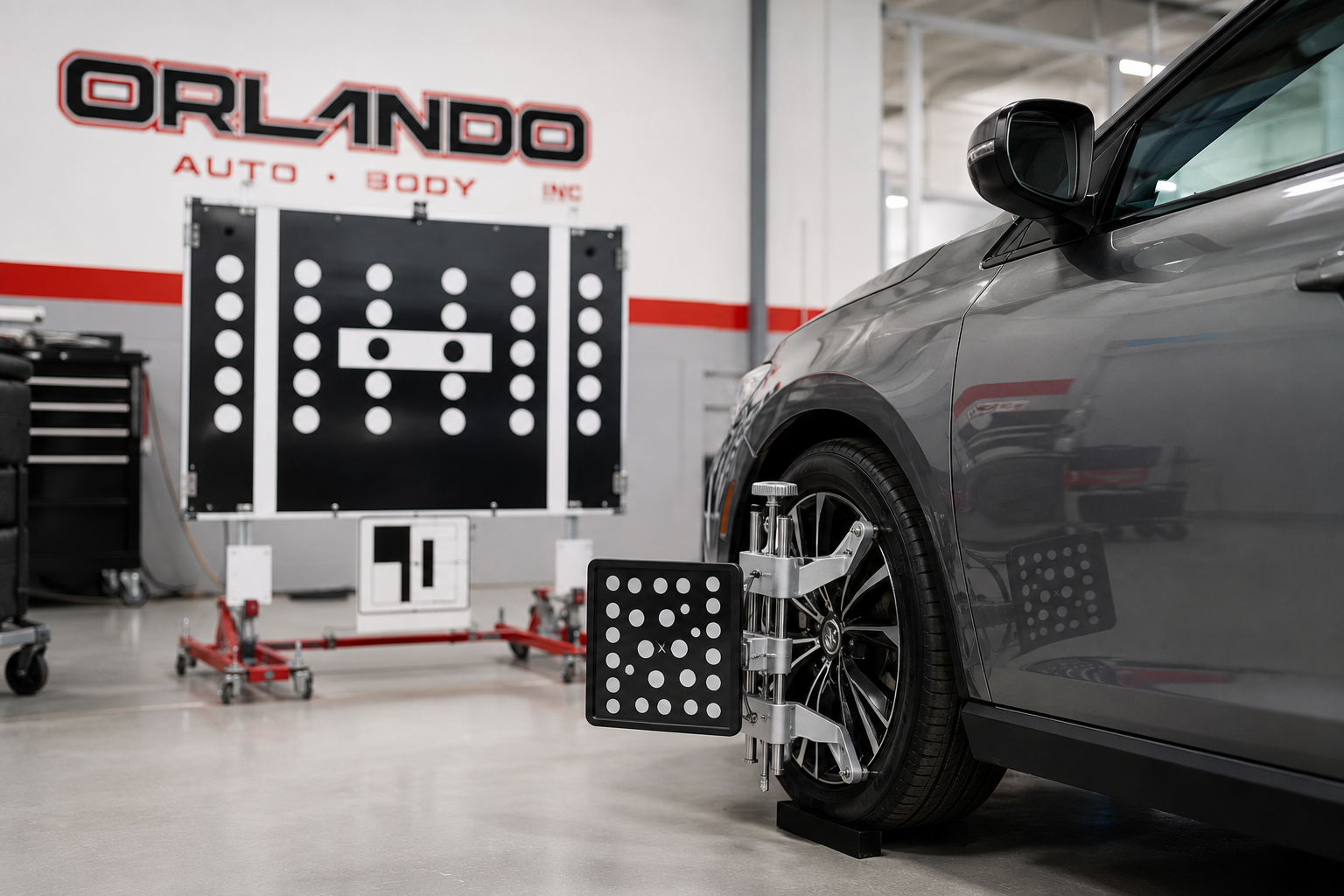
- ADAS calibration
The goal is not only to restore the appearance of the vehicle but also to restore the technology designed to help protect you and your passengers.
Why Calibration Matters; ADAS calibration after accident
A safety system is only helpful if it works correctly.
If a camera or sensor is out of alignment, it may provide inaccurate information to the vehicle.
That could affect features such as emergency braking, lane keeping assistance, adaptive cruise control, or collision warning systems.
Calibration helps ensure those systems are operating according to manufacturer specifications.
Trust a Shop That Understands Modern Vehicles
As vehicles become more advanced, proper collision repair requires more than bodywork alone.
Repairing the visible damage is only part of the process.
At Orlando Auto Body, we understand the importance of modern vehicle safety systems and follow manufacturer repair procedures whenever applicable. Our team works to ensure your vehicle not only looks right after a repair but that the technology designed to keep you safe is functioning properly as well.
The Bottom Line
If you’ve ever looked at an estimate and wondered why a calibration was included after a seemingly minor accident, you’re not alone.
Modern vehicles rely on cameras and sensors more than ever before.
Sometimes the damage you can’t see is just as important as the damage you can.
Proper calibration helps ensure your vehicle’s safety systems continue working exactly the way they were designed to.
How’s Your Drive?
Today’s vehicles are smarter than ever. After an accident, make sure the technology protecting you receives the same attention as the visible repairs.